Executive Summary
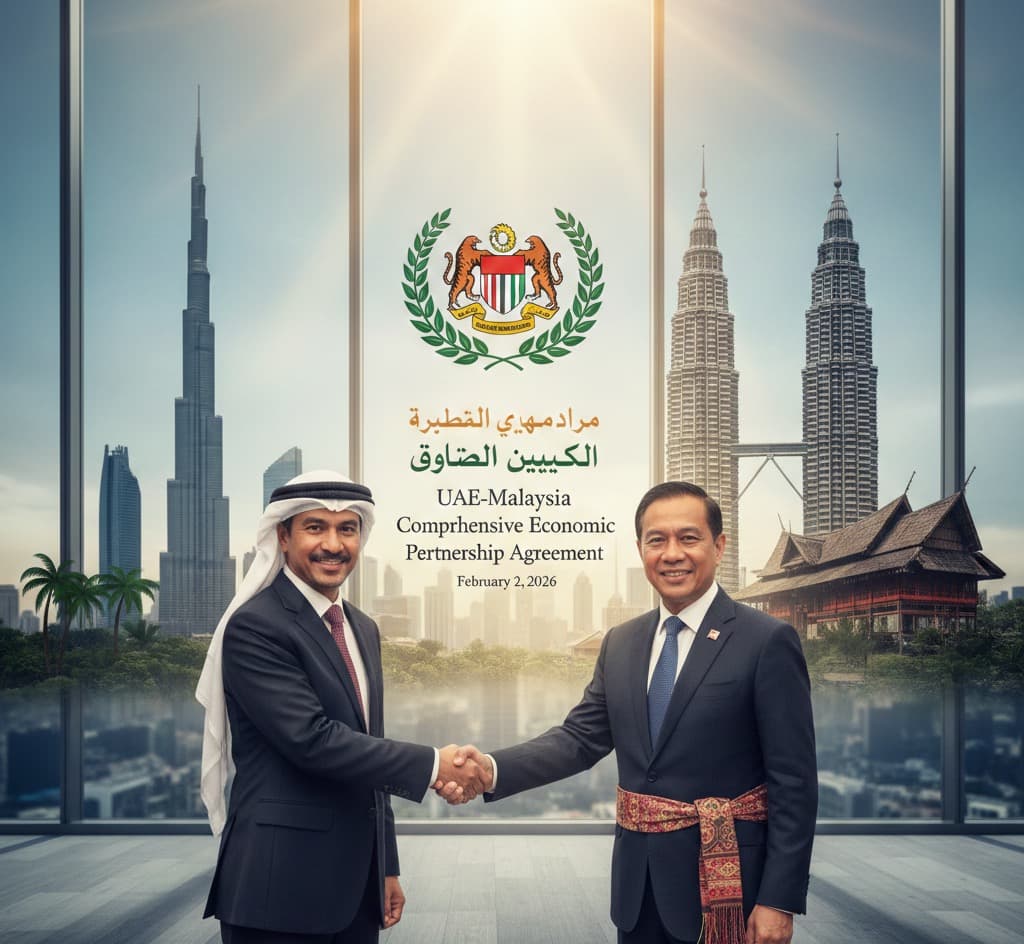
The UAE–Malaysia Comprehensive Economic Partnership Agreement is more than a trade-policy development. It is a signal that commercial links between the Middle East and Malaysia are becoming more structured, creating a timely reason for companies to reassess Malaysia as an ASEAN landing point.
More than ordinary trade news
The UAE–Malaysia Comprehensive Economic Partnership Agreement entered into force for Malaysia on 1 October 2025, marking a new stage of economic cooperation between the two countries. For businesses, this is not only about trade facilitation. It is a market signal that the connection between the Middle East and Malaysia is becoming more structured, strategic and supported by policy.
Malaysia as an ASEAN landing point
Southeast Asia has long attracted Middle Eastern companies, with Singapore often considered first. Malaysia is becoming increasingly important because it combines regional access with a practical operating environment.
- A strategic Southeast Asian location
- A multilingual business environment
- Competitive operating costs relative to many regional hubs
- Mature company-setup and commercial infrastructure
- Access to nearby markets including Singapore, Indonesia, Thailand and Brunei
- Potential for regional operations, trading, outsourcing and market testing
Where opportunities may develop
The agreement signals stronger cooperation around trade, supply-chain connectivity, investment and private-sector partnerships. This creates a relevant planning context for companies considering Malaysia and the wider ASEAN region.
- Trade and distribution
- Consumer brands
- Halal products
- Technology and services
- BPO and operational support
- Regional market expansion
- B2B partnerships
How Xinova supports market entry
Xinova helps Middle Eastern companies connect entity setup with the practical requirements of local operation.
- Malaysia company setup
- Business landing packages
- Market-entry advisory
- BPO talent outsourcing and team building
- Company secretary, address, accounting and tax coordination
- Local market research and entry strategy
- Middle East–Malaysia partnership consulting
Choosing the right market entrance
Registering an entity is only one part of entering ASEAN. Companies also need a suitable operating model, market evidence, local support, partnership direction and an execution plan. The CEPA creates a new window for commercial activity, but value will depend on how businesses translate policy opportunity into real local operations.
Xinova Perspective
Xinova believes this is an appropriate time for Middle Eastern businesses to reassess Malaysia as a Southeast Asia entry point. Entering ASEAN is not only about setting up an entity; it is about choosing the right market entrance and building a workable local operating foundation.
Xinova Advisory
Plan a Malaysia market entry
Discuss company setup, local operations, market research and ASEAN expansion planning with Xinova.
Discuss Your RequirementsReference sources
This article is provided for general information and strategic discussion only. It does not constitute legal, tax, financial, immigration or regulatory advice. Requirements and policies may change, and professional advice should be obtained for individual circumstances.